Who is Shiva? The meaning of the god of transformation
A clear, accessible introduction to Shiva: his relationship with transformation, meditation, cosmic dance and the symbols associated with him.
Published
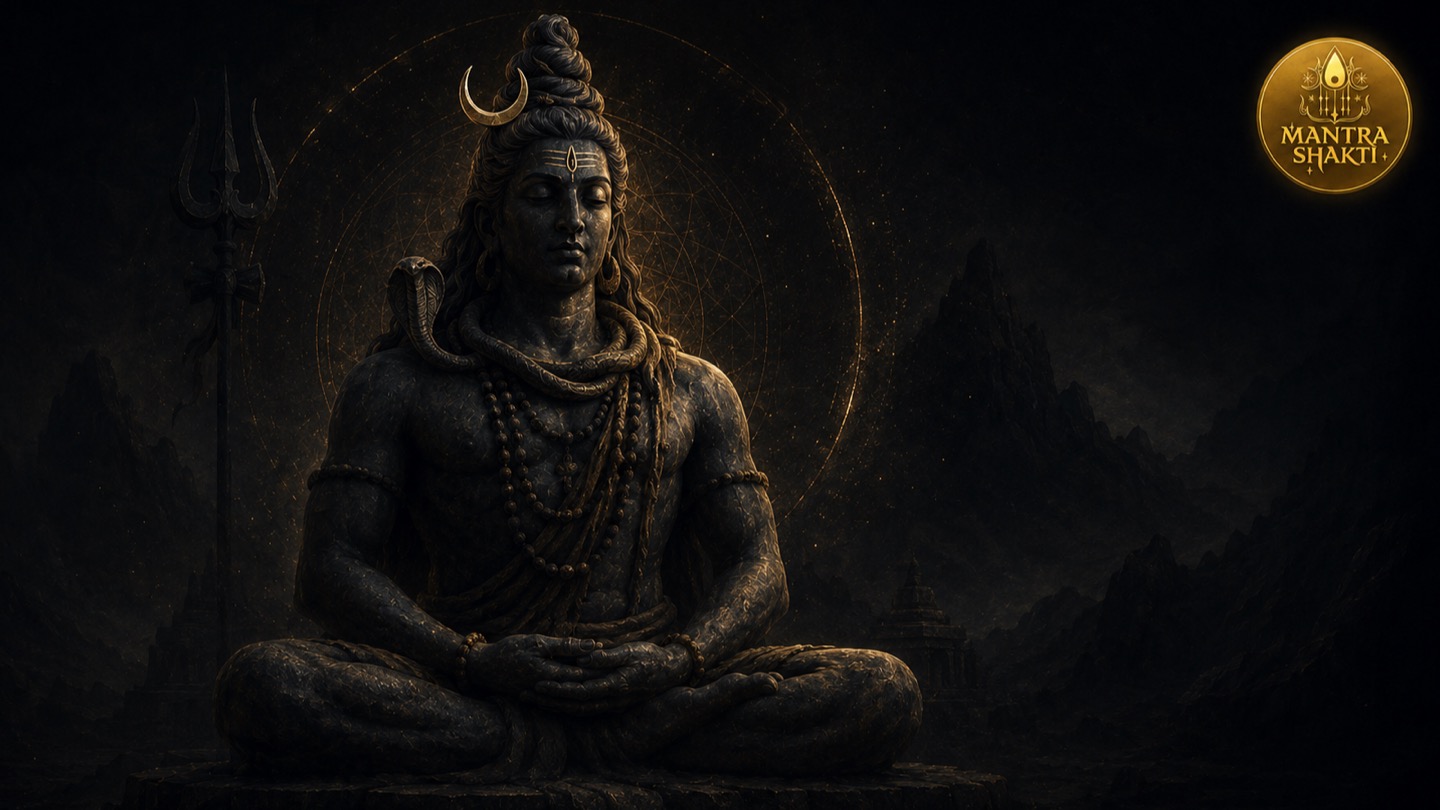
Shiva is one of the most recognised and, at the same time, most profound figures in the traditions of India. He is portrayed meditating in the mountains, dancing within a circle of fire, wearing a crescent moon in his hair or holding a trident.
Each of these images expresses a different facet. Shiva can be silence and movement, stillness and intensity, dissolution and rebirth.
That is why approaching Shiva requires more than simply defining him as “the god of destruction”. That description, widespread in the West, leaves out much of his meaning.
Shiva and transformation
In many popular explanations of Hinduism, Shiva is associated with dissolution within a cycle of creation, preservation and transformation. Yet this “destruction” should not be understood only as something negative.
It is the dissolution of one form so that another can emerge.
Night gives way to day. One chapter ends and another begins. An identity, habit or idea stops serving us and needs to change. From this perspective, Shiva represents the force that allows us to release what has completed its cycle.
It is not about destroying for the sake of destruction, but about making room for what is new.
In Shaivism—the diverse set of traditions that recognise Shiva as the supreme reality or principal deity—Shiva does not simply perform one function within a triad. He is also consciousness, presence and wholeness.
The great yogi
One of the best-known images of Shiva is Adiyogi, the first yogi: seated in meditation, his body still and his gaze turned inward.
In this form, Shiva represents the awareness that remains steady behind the changes of the mind and the world. It is not passive stillness, but an awake presence.
That is why Shiva is deeply connected with yoga and meditation. His figure recalls the possibility of observing our thoughts and emotions without being completely carried away by them.
Amid external movement, there is an inner space of silence.
Nataraja: Shiva as Lord of the Dance
Shiva also appears as Nataraja, the Lord of the Dance. In this representation, he dances within a circle of fire, while his arms and gestures express different forces of the universe.
His dance brings together creation, continuity, dissolution, concealment and liberation. The movement is intense, yet his face remains serene.
That combination is one of the image’s most powerful teachings: it is possible to find a centre of stillness even amid change.
The small drum he holds, called a damaru, is associated with creative sound. The fire represents transformation. Beneath one of his feet appears ignorance or illusion, which prevents us from recognising our true nature.
Shiva’s dance is not only destruction. It is the complete rhythm of existence.
The symbols of Shiva
Representations of Shiva contain many symbolic elements. Their interpretations may vary by tradition, but some of the best-known are:
The third eye
The eye on his forehead symbolises a vision that goes beyond appearances. It represents discernment, inner knowledge and the ability to perceive what is not evident to ordinary sight.
The crescent moon
The moon in his hair is connected with the passage of time, cycles and renewal. Shiva carries this movement, but is not limited by it.
The Ganges River
In many images, the Ganges flows down from Shiva’s hair. The traditional story tells how Shiva received its immense force to soften its descent to Earth. The scene expresses containment, grace and the power to transform an overwhelming energy into a nourishing current.
The serpent
The serpent around his neck may represent vital energy, awareness and mastery over fear and death. Shiva does not reject what causes fear: he integrates it.
The trident
The trishula, or trident, allows for many readings. It may be connected with past, present and future; creation, preservation and dissolution; or different qualities of nature. A shared idea runs through these readings: Shiva transcends and brings together forces that seem separate.
The ashes
The ashes on his body remind us that all material forms are temporary. They are not a pessimistic message, but an invitation to recognise what remains when the superficial changes.
Shiva and Shakti
Shiva is often presented alongside Shakti, the dynamic, creative energy of existence. Shiva represents consciousness; Shakti, the force that manifests it and sets it in motion.
They are not two completely separate realities. They are inseparable dimensions of one wholeness: consciousness and energy, presence and expression, silence and sound.
This relationship is especially meaningful to us as Mantra Shakti. When we chant a mantra, an inner intention takes form through breath, voice, rhythm and community. Silence becomes sound, and sound leads us back towards silence.
Why are mantras dedicated to Shiva chanted?
Shiva mantras are chanted as a form of devotion, contemplation and inner transformation. There is no single way to relate to Shiva.
For some people, Shiva is a deity. For others, he symbolises consciousness, the ability to move through change or the courage needed to leave behind what no longer belongs.
One of the best-known mantras is:
ॐ नमः शिवाय
Om Namah Shivaya
It is often translated as “I bow to Shiva”, “I offer salutations to Shiva” or “I recognise the auspicious”. Bowing does not necessarily imply external submission: it can also be understood as a way to release the ego and open to a broader awareness.
Listen to our version of Om Namah Shivaya
We recorded our version of this mantra in a live session, sharing music, presence and collective singing.
Watch our version of Om Namah Shivaya on YouTube
You can listen to it as a song, sing with us or simply let the mantra accompany a few minutes of your day.
Sources and recommended reading
- The Metropolitan Museum of Art — Recognizing the Gods
- The Metropolitan Museum of Art — Hinduism and Hindu Art
- Encyclopaedia Britannica — Shiva
Editorial note: the traditions associated with Shiva are broad and diverse. This article offers a general introduction and does not seek to reduce all interpretations to a single reading.
Continue exploring
From text to music
Listen to Mantra Shakti or explore our two formats for organising a gathering.