Navaratri: what intention do we bring to chanting?
What is Navaratri? Explore Durga, Lakshmi and Saraswati through chanting, and reflect on what to let go of, nurture and understand with Mantra Shakti.
Published
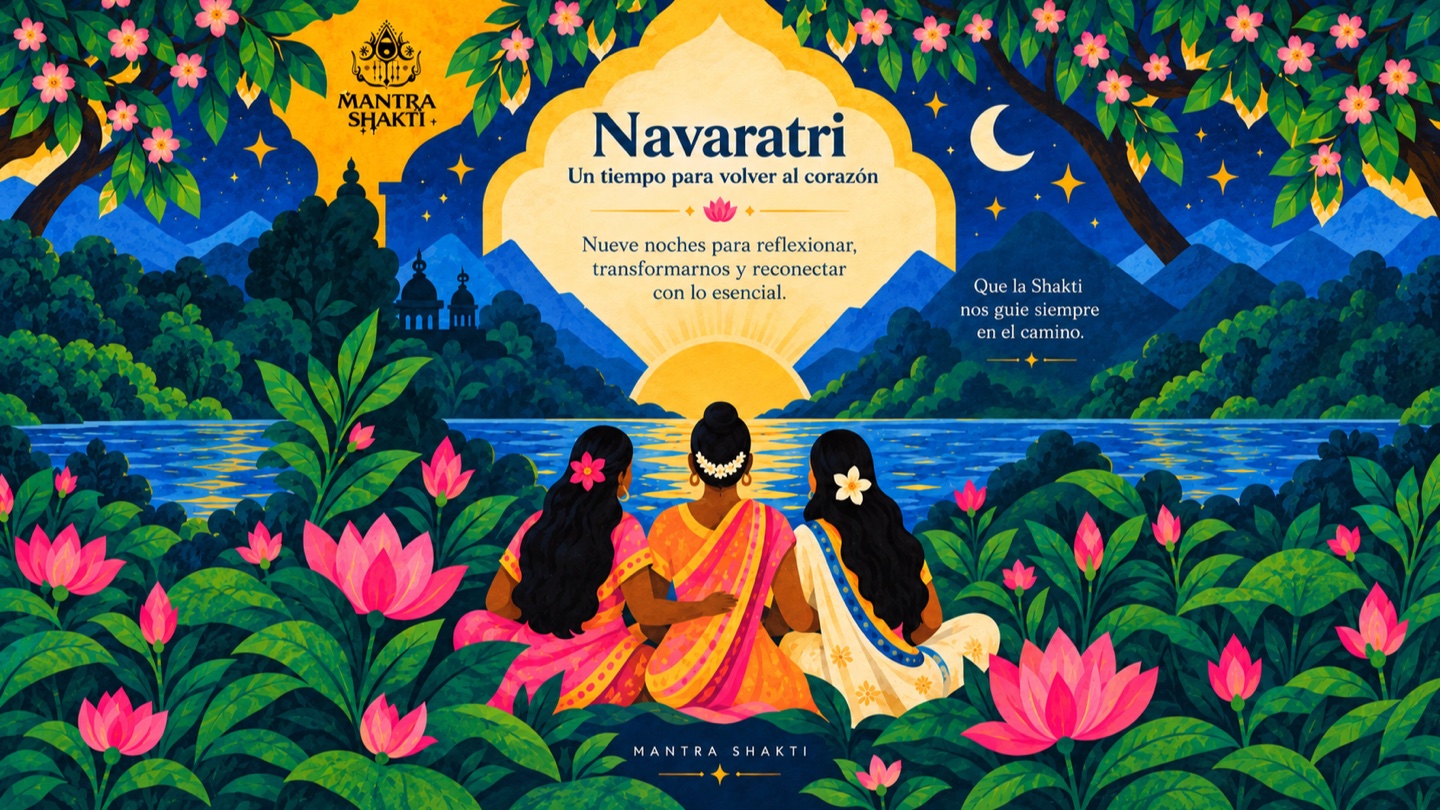
If we gathered to sing to Shakti today, what intention would you bring to the chanting?
Perhaps something to give thanks for. Perhaps something you need to let go of, a quality you want to nurture or a question that is still open.
At Mantra Shakti, this is how we approach Navaratri. When we sing together, each person arrives with something different. The same phrase can bring those intentions together without our having to explain everything we carry.
The nine nights offer a setting in which to pause with that question: to learn who we are singing to and recognise what we want to bring to that encounter.
What is Navaratri? Nine nights of Shakti
Navaratri means “nine nights”. In different Hindu traditions, it is a time dedicated to honouring the Divine Mother through her manifestations. Celebrations vary between regions and communities.
Shakti names the divine power, worshipped as feminine, that creates, sustains and transforms life. In devotion to the Goddess, speaking of the Mother expresses a relationship: someone to turn to, thank and ask for guidance.
Durga, Kali, Lakshmi and Saraswati are names that bring us closer to different forms of that divine presence. Knowing them gives context to the chanting: it helps us understand who the praise is addressed to.
Navaratri in three stages: Durga, Lakshmi and Saraswati
In Hindu Fasts and Festivals, Swami Sivananda describes an inner journey organised into three groups of three days: first Durga, then Lakshmi and finally Saraswati. This teaching brings together the purification of spiritual life, the cultivation of divine qualities and an opening to knowledge of the Self.
Swami Sivananda also presents the Mother as Maha-Kali, Maha-Lakshmi and Maha-Sarasvati in his teaching on the worship of Devi, the Goddess.
The journey can be expressed in three words: purify, flourish and understand. A journey to connect with the Shakti within us.
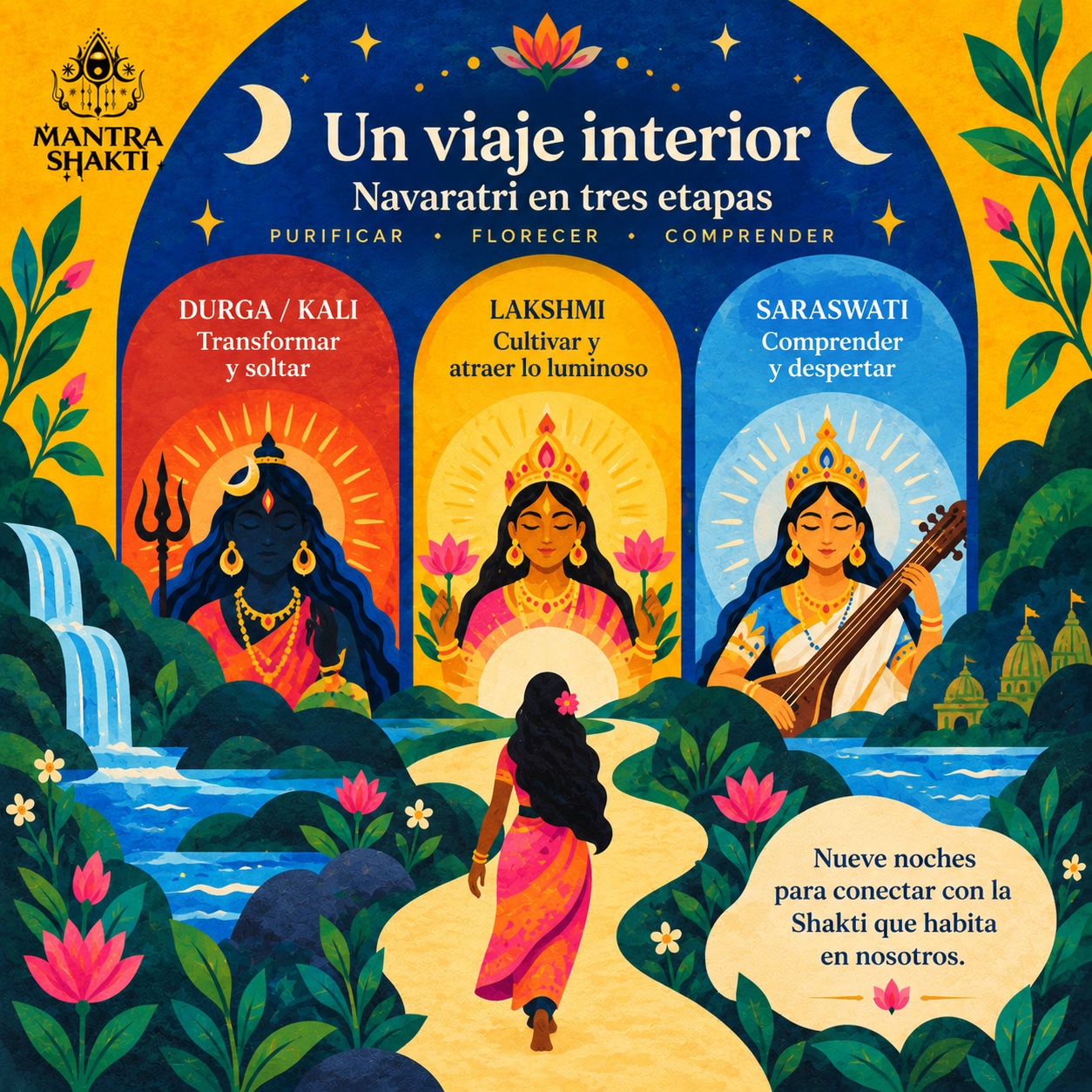
Durga and Kali: what do I need to transform?
In the first three days, Swami Sivananda places the worship of Durga, the strength that removes obstacles in spiritual life and protects the practice. His explanation emphasises recognising and transforming the tendencies that draw us away from that path.
As we approach the chanting, we can make that intention concrete. Perhaps there is a way we respond to others that we want to reconsider, or a habit we keep feeding even though we want to change it.
What do I need to transform or begin to let go of? Naming something specific can be a way to bring it honestly to the chanting and ask the Mother for guidance.
Lakshmi: what do I want to nurture?
Days four to six are dedicated to Lakshmi. In this reading, her wealth includes the divine qualities cultivated in spiritual life. After recognising what we want to transform, the question becomes what we will care for.
In our invitation, that cultivation takes familiar words: love, gratitude and harmony. Each can take a concrete form: thanks we want to express, more attention to a relationship or an act of care we want to sustain.
What do I want to nurture? This intention also has a place in the chanting: recognising what we have received and giving attention to what we want to see flourish.
Saraswati: what do I need to understand?
In the last three days, worship turns to Saraswati, associated with knowledge and wisdom. Swami Sivananda connects this stage with spiritual knowledge. The image of Saraswati with her veena, a stringed instrument, also brings music and knowledge together within that devotional context.
The question we bring to the chanting can remain open. Perhaps we want to understand a decision better, or learn to listen to something we still find difficult to understand.
What do I need to understand? We can ask that question and approach Saraswati with a desire to learn, leaving room to keep listening.
A personal intention within shared chanting
In kirtan, participatory devotional singing, one voice may offer a phrase and the group respond. Sharing those words leaves room for what each person brings: gratitude, a wish to transform something or a search for understanding.
At Mantra Shakti, this is how we want to approach Navaratri: one circle can bring different intentions together. The context of the Goddess and her forms accompanies that encounter; each person can recognise what they wish to offer to the chanting, sing or take part by listening.
Before joining in, you can pause with just one of the questions running through this guide: what you need to transform, what you want to nurture or what you wish to understand. Choose the one that makes sense for you today.
Returning to the heart can begin with the intention you bring today. If we gathered to sing to Shakti, what would yours be?
Sources and recommended reading
Continue exploring
From text to music
Listen to Mantra Shakti or explore our two formats for organising a gathering.